Before a sporting event
My teen wasn’t picked for a competition: How can I give them the support they need?
Before a sporting event
My teen wasn’t picked for a competition: How can I give them the support they need?

Co-author: Véronique Boudreault, PhD, PsyD, CMPC® and holder of the Aléo research chair
When a teen isn’t chosen to compete in a sporting event, it can affect much more than just their pride as an athlete; it can undermine their self-esteem and sense of belonging.
Here are a few tips on how to react in the immediate aftermath: what to say, what to avoid, and when to be concerned.
In collaboration with ALÉO

Understanding what they’re going through
For many young athletes, their schedule, relationships, and sense of self all revolve around their sport. So when they aren’t selected to compete, the disappointment might feel more like rejection: “Am I not as good as the others?” “Was all my hard work for nothing?” What’s more, watching their teammates get picked often sharpens this sense of comparison.
However they react, it’s normal: Sadness, anger, silence, and discouragement are all ways of coping with the same blow. Teens who are perfectionists or prone to anxiety, or whose identity is wrapped up in being an athlete may be more affected. During adolescence, teens’ ability to put things into perspective and regulate emotions is still developing: They need a dependable adult to help them navigate rough patches like this.
What to say and what to avoid saying when helping your teen deal with disappointment
Your role in the first few minutes is to comfort, not to analyze or look for lessons. There are three key messages you need to communicate to your teen: I can see that you’re hurting; you have every right to be disappointed; I’m here for you and we don’t have to talk about it if you don’t want to.
✅ Use phrases like:
- “I know how much this meant to you.”
- “It’s completely normal to be disappointed.”
- “I’m still proud of you.”
❌ Avoid wording that downplays the situation, even if well intentioned:
- “It’s not a big deal.”
- “You’ll get over it.”
- “There will be other opportunities.”
These reassurances are often shared too soon and can make your teen feel like they’re overreacting. Instead, remind them that their worth isn’t tied to this result.
If your child won’t talk, give them time; don’t interpret their silence as rejection: “I can tell you don’t want to talk about it right now. Just know I’m here if you need me.” Check in with them later, but don’t interrogate them.
Give them a chance to cool off before bringing it up again. This could take a few hours or even a few days. Once they’re ready, tell your child what you’ve noticed, and help them regain control over the things that are still within their power: deciding to take a break, asking their coach for feedback, getting back to training, adjusting their goals, etc.
How to support your teen effectively without being overbearing
Supporting means being there without taking over: listening, validating, reminding them of their worth, and supporting their choices.
❌What to avoid: Handling the situation for them, calling the coach in the heat of the moment, challenging the decision without talking to them beforehand, or pressuring your teen to react based on your own needs rather than theirs.
✅Simple actions that can make a big difference:
- Be a calm presence
- Be available without being pushy
- Lower expectations for a while
- Acknowledge their efforts
- Encourage time with friends and activities outside of sports
- Avoid rehashing the decision over and over
- Remind them that they’re more than their sport
Give your child time to regain their enthusiasm. A temporary dip in motivation is normal after a big disappointment. Help them gradually rediscover the joy of movement and reconnect with their teammates. Try asking this question: “What would be the most helpful for you? Taking a step back, carrying on as usual, or thinking about what comes next?”
Should you contact the coach? In most cases, it’s best to let your child take the lead if they’re able to. Talk it over with your teen first: “Do you want to ask for feedback?” “Do you want me to help you prepare what you’re going to say?” If you need to contact the coach yourself, keep calm and stick to the facts. Focus on your child’s development, not on contesting the decision. Exception: If the decision was conveyed in a way that was disrespectful or humiliating or if the child feels unable to talk to the coach themself, an adult can step in to clarify the situation, unless doing so puts their safety at risk.
To help them remember all the other facets of their personality:
Share this info sheet with your teen: I am more than my athletic performance.When should you be concerned?
In most cases, it’s normal if your teen is sad or more withdrawn for a while after they learn that they haven’t been selected. However, you should keep an eye on the intensity, duration, and overall impact of their emotions to ensure their mental health isn’t being negatively affected.
Be extra vigilant if your teen:
- Completely isolates themself
- Loses interest in several areas of their life, avoids school, or avoids practice
- Becomes very irritable or experiences changes in sleep or appetite
- Severely belittles themself or becomes very anxious
- Uses drugs or alcohol to cope with their feelings
In general, you don’t need to worry too much if your teen starts to feel a little better after a few days. If they still feel sad after more than two weeks, that warrants more concern. If your teen mentions suicide or self-harm, act quickly.
Support resources: a school counselor, psychologist, social worker, or family doctor. In Quebec, Info-Social 811 provides psychosocial support around the clock. The suicide crisis hotline, 9-8-8, is available 24/7. If your teen is in immediate danger, dial 911.
When a young athlete isn’t picked to compete, it can affect their self-esteem, athletic identity, and confidence. But with the right support, it can also become an opportunity to learn how to cope with disappointment and to separate self-worth from achievement.
Your role isn’t to “fix” the situation before they’re ready. It’s to be a reassuring presence. Listen before explaining, validate before giving advice, and support without taking over.
It’s only natural that you’d be affected by your child’s disappointment, too. Acknowledging your own reaction, without burdening your teen, is part of your support role.
Additional resources
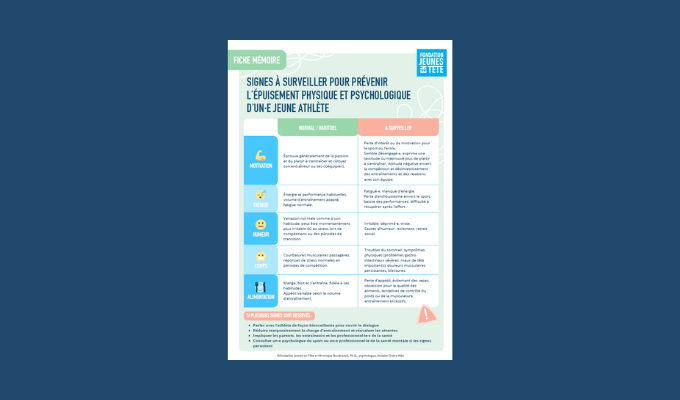
Teens and sports: Warning signs
A summary table of warning signs of physical and psychological exhaustion in young athletes.
Download PDF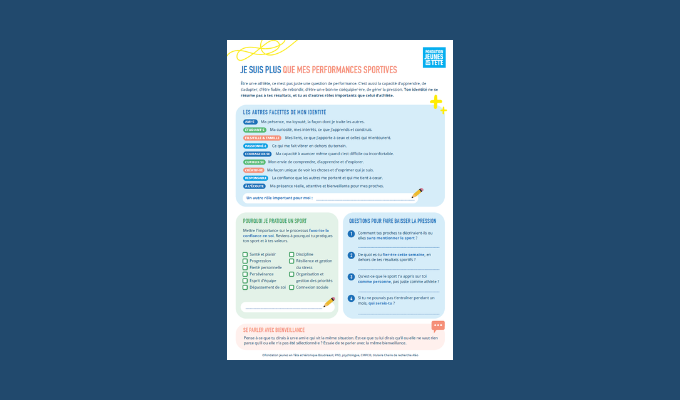
I'm more than my athletic performance
An athlete’s worth extends well beyond their results. Share this exercise with your teen to help them explore who they are outside of their sport!
Download PDF